
How Kansas City Weather Beats Up Wood Decks (And What You Can Do About It)
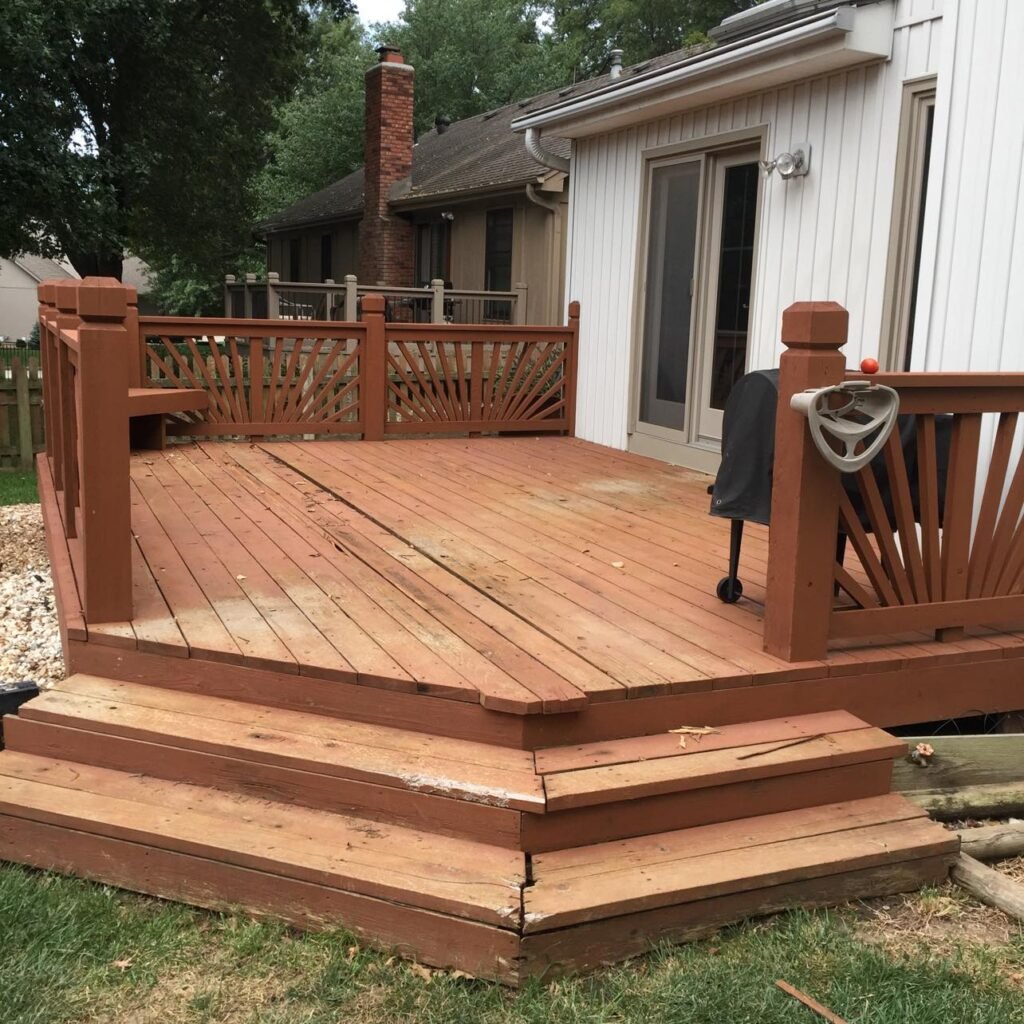
If you’ve lived in Kansas City for any length of time, you already know what our weather is like. One day it’s hot enough to fry an egg on the driveway, and a few months later you’re scraping snow off the grill. We get heavy spring rains, humid summers, freezing winters, and enough temperature swings to keep your furnace and air conditioner working overtime.
Your deck has to deal with all of it.
A lot of homeowners think decks just wear out because they’re getting old. Age definitely plays a part, but around here, weather is usually what speeds things up. After enough years of sun, rain, snow, and freezing temperatures, even a well-built deck starts showing signs of wear.
The good news is that most weather damage doesn’t happen overnight. It builds up little by little, which means you’ve got time to catch problems early and keep your deck in good shape.
It All Starts with Water
If you asked us what’s responsible for more deck repairs than anything else, we’d probably answer in one word—water.
Not the big thunderstorms. Not the snow.
It’s the water that hangs around after the storm is over.
Leaves pile up between deck boards. A flower pot sits in the same spot all summer. Gutters overflow onto one corner of the deck every time it rains. Before long, moisture starts working its way into the wood.
At first, you probably won’t notice anything.
Then the stain starts peeling.
Maybe one board feels a little soft when you step on it.
A year or two later, you’re replacing lumber that could’ve lasted much longer with a little maintenance.
Summer Isn’t Much Easier
Most people worry about winter, but summer can be just as rough on a wood deck.
Kansas City summers bring plenty of heat, and the sun can bake a deck day after day. As the wood dries out, it naturally shrinks. That’s when you start seeing small cracks, splinters, and boards that don’t look quite as smooth as they used to.
UV rays also break down stain over time. Once that protective layer starts wearing off, the wood is left to handle the weather on its own.
If your deck gets full sun all afternoon, you’ll probably notice those changes sooner than someone whose deck stays shaded most of the day.
Winter Has a Way of Finding Weak Spots
Winter doesn’t usually create problems. It exposes the ones that were already there.
If water has worked its way into a crack or around a fastener, freezing temperatures make things worse. As the water freezes, it expands, putting extra stress on the wood.
That’s why we’ll often get calls in the spring from homeowners saying, “Everything looked fine last fall.”
Winter has a way of turning small issues into bigger ones.
Don’t Wait Until Something Feels Unsafe
One mistake we see pretty often is waiting until a railing gets loose or a board breaks before doing anything.
By then, the repair is usually bigger than it needed to be.
Every few months, take five minutes and walk around your deck.
Pay attention to how it feels.
Does a board move more than it used to?
Does a railing wiggle?
Do you notice a soft spot near the stairs?
Are nails or screws starting to work their way up?
Little things like that are your deck’s way of telling you it needs some attention.
Keep It Clean
This sounds almost too simple, but keeping your deck clean really does make a difference.
Leaves, dirt, and debris hold moisture. The longer they sit there, the longer the wood stays wet.
A quick sweep every week or two goes a long way, especially during the fall.
Once or twice a year, give the whole deck a good cleaning with a wood deck cleaner. You don’t need anything fancy—just something that removes dirt, mildew, and old grime without damaging the wood.
Don’t forget the spaces between the boards. That’s where a lot of debris likes to hide.
Stay on Top of Staining
We hear this all the time:
“I figured I’d get one more year out of it.”
Sometimes you can.
Sometimes that extra year ends up costing a lot more than another coat of stain would’ve.
Stain isn’t just there to make the deck look nice. It’s there to protect the wood from sun, rain, and everyday wear.
If the color has faded, water soaks into the boards instead of beading up, or the finish is starting to peel, it’s probably time to stain it again.
Around Kansas City, most wood decks do well with a fresh coat every couple of years, depending on how much sun and weather they get.
Watch the Little Things
Deck problems usually don’t show up all at once.
They start small.
One loose screw.
One cracked board.
One soft spot that wasn’t there last summer.
Fixing those kinds of problems early is almost always easier—and cheaper—than waiting until they spread.
That’s why we tell homeowners not to ignore the little stuff.
It rarely stays little.
Know When to Call Someone
There’s a difference between normal maintenance and structural repairs.
Cleaning, staining, and replacing a loose board are things many homeowners can handle.
But if the framing is rotting, the ledger board is pulling away from the house, support posts are damaged, or the deck feels unstable, it’s worth having it looked at.
Decks hold a lot of weight, especially when you’ve got family and friends over for a cookout. If something doesn’t seem right, don’t guess.
A Little Maintenance Goes a Long Way
The truth is, Kansas City weather is always going to be tough on wood decks. There’s no product or stain that’s going to change that.
What you can do is stay ahead of the weather instead of letting it catch up with you.
Sweep the deck.
Keep it clean.
Restain it when it needs it.
Fix small problems before they turn into big ones.
Do those things consistently, and there’s a good chance your deck will give you many more years of service.
And if you’re starting to notice loose boards, soft spots, or signs of rot, don’t wait until the damage spreads. A professional inspection can tell you exactly what you’re dealing with and help you decide whether your deck needs a simple repair or something more extensive.
After all, your deck should be a place where you enjoy your weekends—not another thing on the house that’s keeping you up at night.