
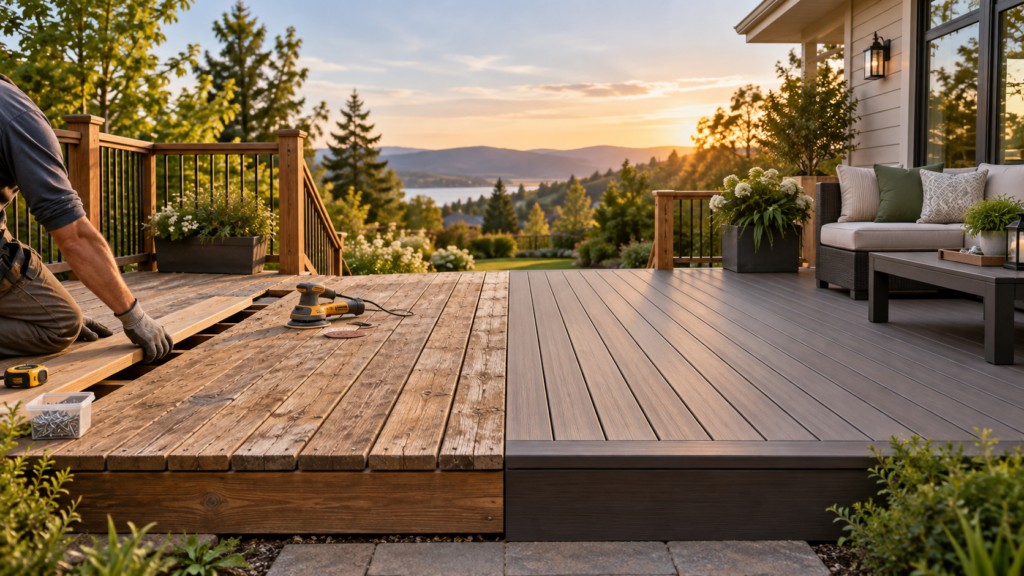
A well-maintained deck is one of the most valuable outdoor features a home can have. It expands your living space, improves curb appeal, and creates an inviting area for entertaining, relaxing, and spending time with family. But when your existing deck begins showing signs of wear, one important question arises: Should you repair your wood deck or replace it with a composite deck?
The answer depends on several factors, including your deck’s condition, your budget, long-term maintenance goals, and how long you plan to stay in your home. While repairing a wood deck is often the most affordable short-term solution, replacing it with composite decking may provide greater long-term value through durability, lower maintenance, and improved aesthetics.
In this guide, we’ll compare wood deck repair and composite deck replacement to help you determine which option offers the best return on your investment.
Wood deck repair involves restoring damaged sections while preserving the existing structure whenever possible.
Common repairs include:
Repairs are ideal when the deck’s foundation and framing remain structurally sound.
Composite deck replacement involves removing existing wood decking and installing composite materials made from recycled wood fibers and plastic polymers.
Depending on the deck’s condition, contractors may:
Composite decking is designed to provide long-lasting performance with significantly less maintenance than traditional wood.
Budget is often the first consideration.
Repairs typically cost less because only damaged components are replaced.
Costs vary depending on:
Minor repairs are generally much more affordable than replacing an entire deck.
Composite replacement requires:
The initial investment is considerably higher, but many homeowners view it as a long-term upgrade rather than simply a repair.
One of the biggest differences between the two options is ongoing maintenance.
Wood decks require regular care, including:
Without routine maintenance, wood deteriorates much faster.
Composite decks require far less upkeep.
Routine maintenance usually involves:
Unlike wood, composite decking does not require:
This makes composite especially attractive for busy homeowners.
Properly maintained wood decks can last 15–30 years.
However, wood remains vulnerable to:
Maintenance plays a major role in determining lifespan.
Composite materials are engineered to resist many common problems affecting wood.
Benefits include:
Many composite products continue performing well for decades with minimal maintenance.
Both materials offer attractive finishes, but each has distinct advantages.
Natural wood provides:
Many homeowners appreciate the classic beauty of real lumber.
Modern composite decking offers:
Manufacturing improvements have made today’s composite decking much more realistic than earlier generations.
Both improvements can increase property appeal, but they do so differently.
A repaired deck demonstrates that the home has been properly maintained.
Many prospective buyers appreciate the reduced maintenance requirements of composite decking.
Natural wood is renewable but often requires:
Its environmental impact depends largely on sourcing and maintenance practices.
Many composite products incorporate recycled materials such as reclaimed wood fibers and recycled plastics.
Their extended lifespan also reduces the frequency of replacement, minimizing long-term material waste.
Repair is usually the better option when:
Timely repairs can add many additional years of service to a wood deck.
Replacement may provide greater long-term value if:
Replacing an aging deck with composite materials often eliminates recurring maintenance concerns for many years.
| Feature | Wood Deck Repair | Composite Deck Replacement |
|---|---|---|
| Initial Cost | Lower | Higher |
| Maintenance | High | Low |
| Lifespan | 15–30 years (with maintenance) | 25–50+ years (depending on product) |
| Staining Required | Yes | No |
| Painting Required | Optional | No |
| Rot Resistance | Moderate | Excellent |
| Insect Resistance | Moderate | Excellent |
| Appearance | Natural wood | Consistent wood-like finish |
| Long-Term Maintenance Cost | Higher | Lower |
Ask yourself these questions:
If your deck only needs localized repairs, restoring the existing wood structure is often the most cost-effective solution.
If the deck has widespread deterioration or you’re seeking a low-maintenance upgrade, composite replacement may provide better long-term value.
Whether you repair or replace your deck, these practices help protect your investment:
Consistent maintenance extends the lifespan of both wood and composite decks.
Yes. Wood deck repair generally has a much lower upfront cost because only damaged sections are repaired or replaced.
Composite decking can improve resale appeal by offering durability, modern aesthetics, and low maintenance, which many homebuyers find attractive.
Sometimes. If the existing framing meets current building codes and is structurally sound, contractors may install composite decking over it. A professional inspection is essential before proceeding.
Composite decking generally has a longer service life because it resists rot, insects, moisture, and fading better than traditional wood.
Absolutely. A properly maintained wood deck offers timeless beauty, natural warmth, and excellent value when repaired and cared for regularly.
Choosing between wood deck repair and composite deck replacement ultimately comes down to your deck’s condition, maintenance preferences, and long-term goals. Repairing a wood deck is often the most economical option when damage is limited and the structure remains sound. It restores safety, extends the deck’s lifespan, and preserves the natural character that many homeowners love.
On the other hand, composite deck replacement offers exceptional durability, minimal maintenance, and lasting visual appeal, making it an excellent investment for homeowners seeking a long-term outdoor living solution. By evaluating your deck’s current condition and future needs, you can make a confident decision that enhances both your home’s functionality and overall value.