
7 Common Deck Problems We See Around Kansas City
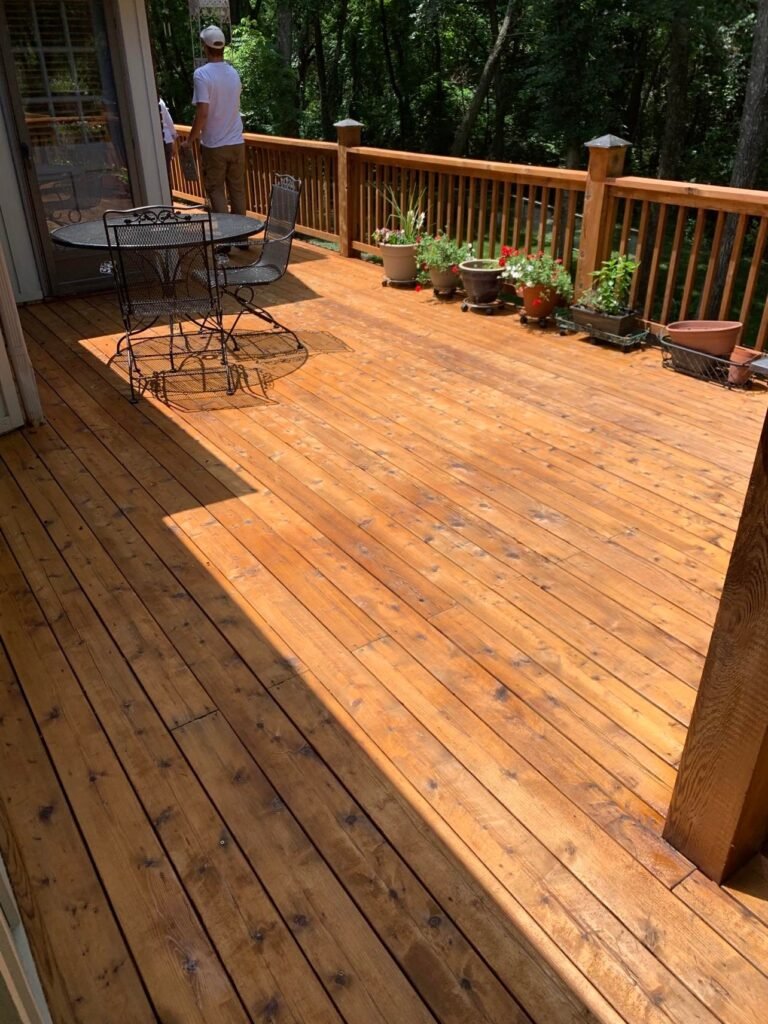
If there’s one thing we’ve learned after working on decks around Kansas City, it’s this—most deck problems don’t happen overnight.
A board doesn’t suddenly rot. A railing doesn’t wake up loose one morning. Most of the time, the warning signs have been there for months or even years. They just go unnoticed until someone steps on a soft spot or grabs a railing that doesn’t feel as solid as it used to.
Kansas City’s weather doesn’t do decks any favors, either. We get hot summers, heavy spring rain, freezing winters, and enough temperature swings to keep wood expanding and shrinking all year long. Over time, that wear adds up.
Here are seven of the most common deck problems we run into and what homeowners should watch for before they turn into expensive repairs.
1. Loose Railings
A sturdy railing shouldn’t move when you lean on it.
If yours wobbles or shifts even a little, don’t ignore it.
Sometimes it’s as simple as loose hardware. Other times, the post itself has started to weaken from moisture or years of movement. Either way, it’s worth fixing before someone gets hurt.
We see this all the time on older decks where the framing is still solid, but the railings have worked themselves loose over the years.
2. Soft or Rotten Deck Boards
Rot doesn’t always announce itself.
From the top, a board might look perfectly fine. Then you step on it and notice it feels a little spongy.
That’s usually a sign moisture has been getting into the wood for a while.
The areas around stairs, planters, and places that stay shaded tend to hold moisture the longest, which is why they’re often the first spots to develop rot.
Replacing a couple of boards now is a lot cheaper than replacing large sections of the deck later.
3. Cracked, Split, or Warped Boards
Wood naturally moves with changes in temperature and moisture.
During the summer, it dries out.
During the spring and winter, it absorbs moisture again.
After years of going through that cycle, boards can crack, split, or start curling at the edges.
A few small cracks aren’t unusual, but deep splits or badly warped boards should be replaced before they become a safety hazard.
4. Nails and Screws Working Their Way Out
Ever walked across your deck and noticed a nail sticking up?
It happens more than people think.
Every season, the wood expands and contracts just enough to slowly push fasteners upward. Left alone, those nails become tripping hazards and can allow boards to shift more than they should.
Whenever we’re doing repairs, we usually replace old nails with deck screws whenever possible. Screws tend to hold much better over the long run.
5. Failing Stain or Sealer
A lot of homeowners think stain is only there to make the deck look nice.
It does that, but it’s also one of the best defenses your deck has against the weather.
Once the stain starts fading or peeling, the wood is left exposed to rain, sun, and moisture.
An easy way to check is after it rains. If water soaks into the wood instead of beading up on the surface, it’s probably time to clean and reseal the deck.
Keeping up with staining every couple of years can add a lot of life to a wood deck.
6. Water Collecting Where It Shouldn’t
If we could prevent one thing on every deck, it’d be standing water.
Water trapped under planters, outdoor rugs, or piles of leaves can sit there for weeks after a storm. That’s when rot, mold, and mildew start showing up.
Take a walk around your deck after the next rain.
If you notice puddles that don’t dry out or areas that always stay damp, it’s worth figuring out why.
Sometimes moving a planter or cleaning debris out from between the boards is enough to solve the problem.
7. Problems Under the Deck
This is the one most homeowners never think about.
Everyone looks at the deck boards.
Very few people crawl underneath.
That’s where we often find the biggest problems.
Support posts, beams, joists, and ledger boards take just as much abuse from the weather as the surface boards do. If one of those structural components starts to rot, the entire deck can become unsafe.
Every now and then, take a flashlight and spend five minutes underneath your deck.
Look for cracked lumber, loose hardware, sagging beams, or anything that doesn’t look right.
You don’t have to be a contractor to notice when something seems off.
Don’t Wait Until Something Breaks
One thing we tell homeowners all the time is this…
Deck repairs almost never get cheaper by waiting.
That loose railing won’t tighten itself.
That soft board isn’t going to dry out and become solid again.
And that small area of rot usually spreads a little farther every season.
Most of the repairs we make started out as small maintenance issues that could’ve been handled much earlier.
A Little Maintenance Goes a Long Way
The good news is that wood decks can last a long time when they’re taken care of.
Keep them clean.
Reseal them when needed.
Replace damaged boards before the problem spreads.
And every once in a while, take a slow walk around the deck and really look at it.
You’ll usually spot small issues long before they become major repairs.
If you’re not sure what you’re looking at, having a deck professionally inspected can give you peace of mind and help you avoid bigger repair bills down the road.
After all, your deck should be a place where family and friends gather—not something you’re worried about every time someone steps outside.